Daan Bakker
Management
Last month, DoorDash announced it’s pulling out of four markets while doubling its engineering investment in the UK, the same company that bought Deliveroo five months ago. In the meantime, Prosus moved ahead with its acquisition of Just Eat Takeaway, consolidating yet another major European delivery player. According to Restaurant Dive, the combined DoorDash and Deliveroo group now handles over $90 billion in annual orders.
In under six months, two of the three platforms that are the most dominant in the European QSR chains changed hands. What is the next move for the platforms? More advanced features, branded websites, loyalty programs, all offered by the aggregator, leaving QSR leaders even more dependent on them?
QSR chains that have been working to reduce delivery platform dependency for the last two years are now seeing the payoff. Here’s what they’re actually doing.
Every head of digital knows the number. 25 to 30 percent per order, every order, across every location, every month. At 50 locations doing €30,000 in monthly delivery revenue each, that’s €450,000 leaving your business per year.
Every order placed through a platform like Uber Eats or JustEat Takeaway is a customer interaction you don’t own. No data. No relationship. You fulfilled the order. They kept the customer.
The real cost of aggregator dependency isn’t necessarily the margin on each order, but the inability to build a customer base that is truly yours. One that you can retarget to order again and again with you.
The most common mistake is launching a direct channel before it’s genuinely competitive, then wondering why nobody switches.
Three things need to be sorted first:
The customers finding you on the delivery platforms are already warm. They want to order food. The question is whether you have a way to bring them into your own ecosystem before they order again.
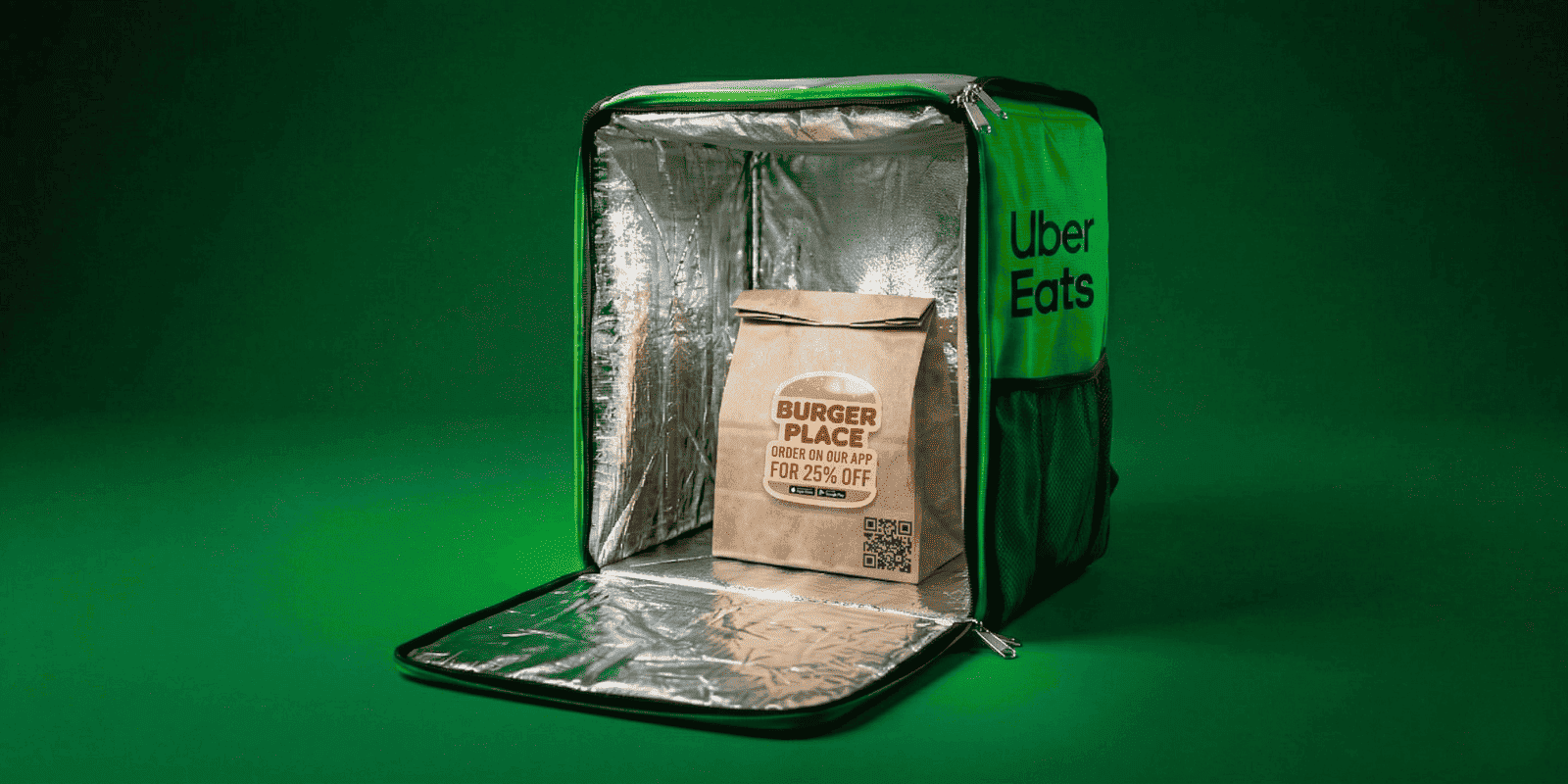
Packaging inserts are the most underused tool here. A card in every delivery box, “Order direct, save £2” with a QR code to your app, reaches every delivery customer at the moment they’re happiest with your brand. The food just arrived. They liked it. That’s when you ask them to change their behaviour, not with a retargeting ad three days later.
New York Pizza used physical touchpoints at delivery as part of their direct channel growth. It works because the timing is right, not because the discount is large.
Once someone is in your app, the dynamic shifts. A push notification on a Friday afternoon, “Your usual is ready in 20 minutes,” drives reorders that no aggregator can replicate. They don’t have that relationship with your customer. You do. That’s worth protecting.
In some markets, you’re allowed to price higher on the platfroms than on your own channel. Where that’s possible, a 10-15% price difference combined with a clear “order direct and pay less” message on your site gives customers a rational reason to switch.
But in markets like the Netherlands, platform contracts often require price parity.
One of the currently underused strategies that big players are swearing by is to keep prices the same, but use your loyalty program to make the direct channel meaningfully cheaper in practice. Points earned on every direct order, a welcome discount for first-time app orders, free delivery for loyalty members, these create a real financial incentive to switch without touching your platform pricing agreements.
Most chains track total order volume. That won’t tell you if your direct channel strategy is working.
The number you want is the direct order percentage, what share of your delivery orders comes through your own channel versus third-party platforms. Set a target. Moving from 20 percent to 35 percent direct across your estate changes your margin profile more than most operators realise. At 50 locations doing €30,000 monthly delivery revenue each, that shift is worth over €630,000 a year, before you count the data and customer relationship value.
Break it down by location. Some stores will be ahead. Those show you what’s working. The ones lagging show you where to step in. The QSR chains running this well are watching this number weekly, not quarterly, or annually.
There are now huge investments in the UK and EU for advanced features, branded websites, loyalty infrastructure, integrated ordering, available directly through the platforms. For independent restaurants with no digital presence, that’s a genuine offer. For a multi-location QSR chain actively trying to reduce delivery platform dependency, it’s a trap. Better tools in exchange for deeper dependency.
The chains doing well right now, Fireaway, New York Pizza, Apache Pizza, aren’t running separate systems that happen to connect. They’re running one platform where the website, app, loyalty, delivery management, and per-location reporting all work together, via the same system.
Not because it’s easy, but because the alternative is managing four vendors and still not having the data you need.
S4D was built for this. Multi-location QSR chains with delivery at the core, trying to compete with the platforms without the platforms’ infrastructure budget.
Book a call with our team. We'll walk you through what the shift looks like operationally, and what it's worth at your scale.
Daan Bakker
Management